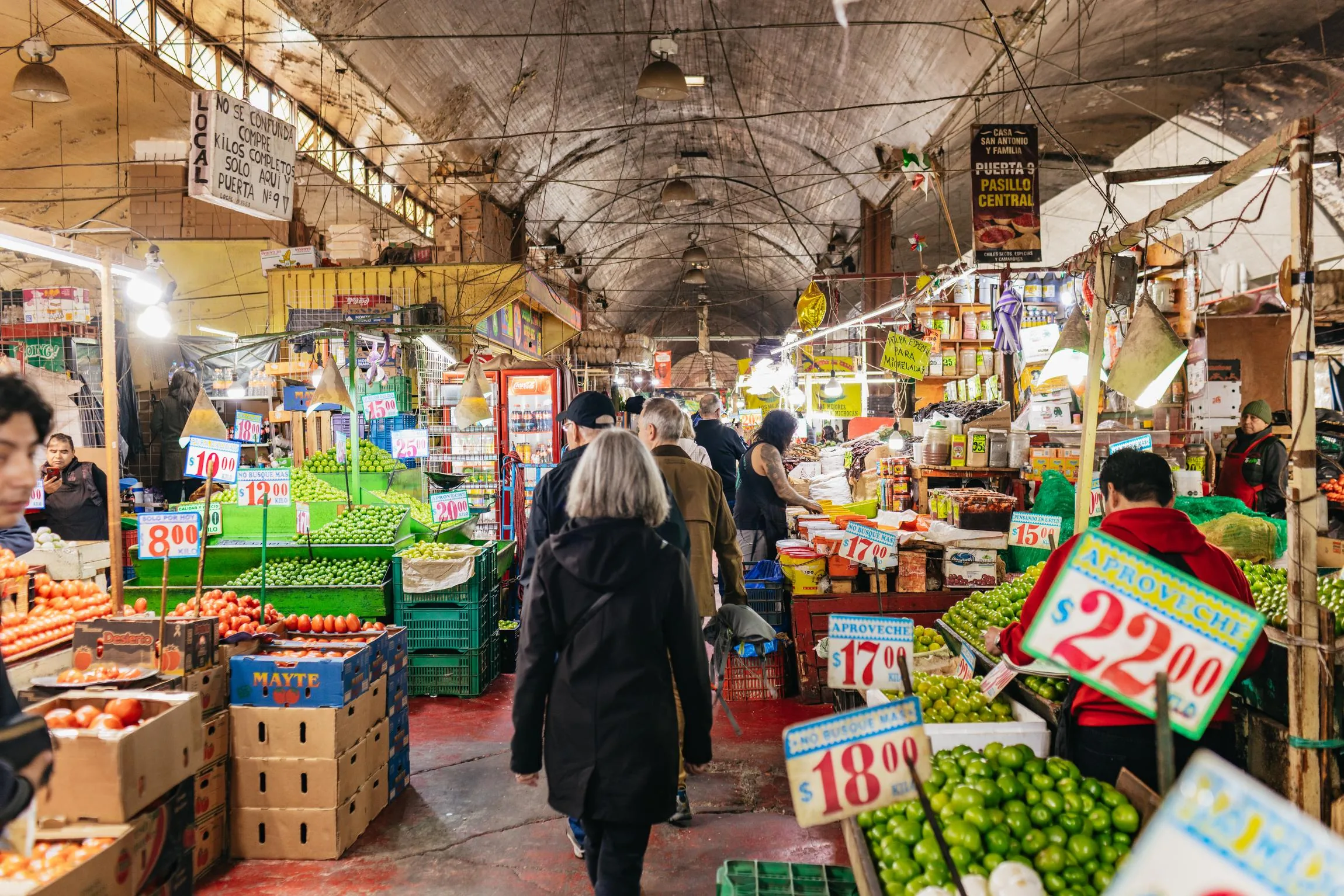
Why Mexico Is the Americas' Great Food Country
A Cuisine Old Enough to Be a Heritage Site
Mexican food is one of the very few cuisines UNESCO has listed as intangible cultural heritage, and the reasons are edible everywhere: corn nixtamalized the way it has been for millennia, moles built from dozens of ingredients over days, agave roasted in earthen pits and distilled in village stills, chocolate in the country that invented drinking it. This is not a cuisine that was refined in restaurants — it lives in mercados, at sidewalk griddles, in home kitchens and at tianguis stands, which is exactly why eating well here rewards local knowledge more than almost anywhere on earth.
The pleasure — and the problem — is that none of it is in one place. The al pastor turns on trompos in Mexico City; the seven moles and the mezcal palenques belong to Oaxaca; tequila is legally bound to the blue-agave hills around Guadalajara; cochinita pibil comes out of Yucatecan pits near Mérida; and Mexico's astonishing new wine country hides in a Baja valley most travelers have never heard of. Mexican food travel is a set of pilgrimages, and each rewards a different kind of traveler: the one who wants to make something, the one who wants to taste something, and the one who just wants to walk and eat.
This guide exists to help you choose. Below, nine categories of Mexican culinary experience — grouped into tours, hands-on classes, and tastings — each with its own comparison of the best cities to book it in. We don't sell anything on this page. We point you to the right category and city, and let you book on the page that fits your trip.
Choose Your Mexican Food Experience
Nine Ways to Taste Mexico
Grouped into guided tours, hands-on classes, and tastings. Each category page compares the best cities to book it in.
Tours
Mercados, Fondas & Tasting Walks
Eat your way through Mexico City's street-corner canon, Oaxaca's mole country or Mérida's Yucatecan tables with a local guide. The broadest way into a city — markets, history, and six-plus tastings on foot.
Follow the Trompo
A guided crawl through the taquerías locals argue about — al pastor carved at midnight, suadero at the steel comal, cochinita dripping into fresh tortillas, and the right salsa for each.
The Antojitos Circuit
Tlacoyos and huaraches off the comal, tamales at dawn, esquites after dark — eat where Mexico actually eats, with a local who knows which queue is worth it.
Inside the Mercados
Mole pastes stacked like paint, chapulines by the scoop, fruit you can't name — guided walks through the pre-Hispanic trade squares that never stopped trading, tastings included.
Classes
Tastings
Oaxaca's Smoke in a Copita
Village palenques where agave roasts in earthen pits, wild tobalá that outclasses most bottles, and guided flights that teach you to read the smoke. Oaxaca is the pilgrimage; Mexico City pours a strong second.
From Agave Field to Copita
The blue-agave hills of Jalisco are a UNESCO landscape and tequila's only legal home — tour working distilleries from Guadalajara, or taste your way through flights in Vallarta and Los Cabos.
Valle de Guadalupe & the Bajío
Mexico's boom-town wine country — dusty Baja ridges pouring mineral reds between destination restaurants, plus the high Bajío's older vineyards near San Miguel. Tastings are generous; go guided.
Cacao, Where It Began
Chocolate is Mexican by birth — stone-ground with almonds and cinnamon in Oaxacan molinos, whisked to froth the pre-Hispanic way, and traceable here from Maya currency to modern bar.
Where to Book
Mexico's Six Great Food Destinations
Each links to its strongest culinary experience — start here if you already know your destination. Going somewhere else? Browse all eleven destinations →
The Capital of Eating
Al pastor on every corner, mercados the size of neighborhoods, and a street-food canon deep enough to argue about for a lifetime. Start with a guided food walk.
Mexico City Food Tour →Mole & Mezcal Country
Seven moles, tlayudas at midnight, chapulines by the scoop and palenques in the hills — Mexico's most concentrated food destination.
Oaxaca Food Tour →Gateway to Agave Country
Birria, tortas ahogadas, and the blue-agave fields of Tequila an hour away — Jalisco is where Mexico's national drink actually comes from.
Guadalajara Tequila Tour →The Yucatán's Table
Cochinita pibil from the pit, sopa de lima, recados rubbed red with achiote — a Maya-Caribbean food story you can't taste anywhere else.
Mérida Food Tour →Mexico's Wine Country
A dusty Baja valley turned wine destination — mineral reds, experimental blends and open-fire restaurants between the vines.
Valle de Guadalupe Wine Tour →Beyond the Resort Buffet
Cochinita at street stands, ceviche worth leaving the beach for, and taco crawls that show Playa and Cancún still eat Mexican.
Cancún Taco Tour →Food Tour vs Cooking Class
Which Is Right for You?
Book a food tour if you want to taste widely and walk a real neighborhood — the mercado, the fonda, the taquería, with someone who knows which queue is worth joining. It's the better first day in a new city, and the better fit for travelers who'd rather eat than cook. If your appetite is specific, narrow it: a taco tour chases the trompo, a street food tour works the antojitos circuit, and a market tour stays inside the mercado where everything begins.
Book a cooking class if you want to take something home — the technique, the recipes, the confidence to nixtamalize corn or face a mole ingredient list. It's hands-on, usually 3–5 hours, often starting at the market, and it ends in a meal you made yourself.
Still deciding among the tastings? A mezcal tasting is Oaxaca in a copita — smoke, wild agaves and village stills; a tequila tour puts you in the blue-agave fields where the real thing is made; a wine tour is the slow, scenic day in Mexico's surprising vineyards; and a chocolate experience runs the whole arc from Maya currency to stone-ground cup.
How to Choose
Three Questions to Find Your Experience
Do you want to cook, taste, or explore?
Hands-on → a cooking class. Taste with a sense of place → mezcal, tequila, wine, or chocolate. Eat and walk → a food, taco, street food or market tour.
Which city are you in?
Each category page compares the best cities. Mexico City has the deepest supply in every category; Oaxaca owns mole, mezcal and cacao; Guadalajara owns tequila; Mérida owns the Yucatán's pit-roasted canon; Valle de Guadalupe owns the vineyards.
When are you going?
Popular Mexico City tours and Oaxaca classes sell out 1–2 weeks ahead in high season (November–April, and around Día de Muertos everywhere). Remember the Mexican clock — comida is the big meal from 2 pm, and the best taquerías hit their stride after dark.
Mexican Food Experiences — FAQ
What travelers ask before booking a food experience in Mexico.
It depends what you're after. Mexico City has the deepest supply of everything — taco crawls, mercado walks, cooking classes, mezcalerías; Oaxaca owns mole, mezcal and cacao; Guadalajara is the gateway to tequila country; Mérida serves the Yucatán's pit-roasted canon; and Valle de Guadalupe is the surprise wine destination. Our city pages compare the top-rated experience in each.
No — the experiences we compare run in English (many guides are bilingual). The guide handles the ordering and market conversations, and cooking classes are taught in English with recipes to take home.
Guided food and taco tours typically run $40–$90 per person including tastings; hands-on cooking classes $60–$130; mezcal and tequila experiences $30–$120 depending on how far into agave country you go; full-day Valle de Guadalupe wine tours with transport and tastings $130–$250. Each city page lists current prices.
On a guided tour, very — that's half the point of booking one. Guides take you to high-turnover stands they eat at themselves, where food is cooked fresh and hot in front of you. The busy-stand rule (locals queuing, fast turnover) is the reliable heuristic, and your guide applies it for you.
Tequila is legally made from one agave (blue Weber) in and around Jalisco, mostly industrially, and tastes clean and peppery. Mezcal can be made from dozens of agave species — mostly around Oaxaca, in village palenques where the hearts roast in earthen pits — which gives it its signature smoke and wild variety. Tasting both on one trip is one of the great side-by-side lessons in spirits.
Usually yes with advance notice — flag dietary needs at booking. Mexican food culture is surprisingly vegetarian-friendly at the antojito level (quesadillas, esquites, tlacoyos, nopales), and cooking classes are generally the most flexible option of all.
A few days to a week is enough most of the year. In high season (November–April) and around Día de Muertos in late October–early November — when Oaxaca and Mexico City fill up — popular tours and classes sell out 1–2 weeks ahead. Most tours have free cancellation, so booking early is low-risk.
Mexico City for breadth — every regional cuisine in one capital, the deepest taco canon, mercados the size of neighborhoods. Oaxaca for concentration — seven moles, the mezcal palenques, stone-ground chocolate and tlayudas, all walkable in a small colonial center. It's a 50-minute flight or a scenic drive; if you can, do both.
Usually 3–5 hands-on hours: many start with a guided mercado shop, then you press tortillas from fresh masa, char salsa ingredients on the comal, and cook a full menu — often a mole in Oaxaca or classic guisados elsewhere — before sitting down to eat it. Recipes go home with you, and no experience is needed.
November through April is the dry, pleasant high season almost everywhere. Late October–early November adds Día de Muertos — extraordinary in Oaxaca and Mexico City, but book everything early. Summer is low season and rainier in the interior, though tours run year-round and prices soften. There's no bad month to eat in Mexico.
Still have questions? Email us at info@mexico-food-tour.com